India onAir Network

The India onAir Network will launch next year 28 state governance and election Hubs and this national India onAir Hub at india.onair.cc. The India onAir network is supported by the nonpartisan, nonprofit Democracy onAir.

OnAir supports Indians and enhances their democracy by bringing together information, experts, organizations, policy makers, and the public to facilitate greater engagement in federal, state, and local politics and more civil, positive discussions and collaborations on important issues and governance.

Current India Network Hubs include:  India onAirPrime Ministers of India, and 28 state Hubs. Links for the state Hubs can found under the “onAir logo”.

OnAir Post: India onAir Network

Government of India

The Government of India (ISO: Bhārat Sarkār; often abbreviated as GoI), known as the Union Government or Central Government but often simply as the Centre,[a] is the national government of the Republic of India, a federal democracy located in South Asia, consisting of 28 union states and eight union territories.

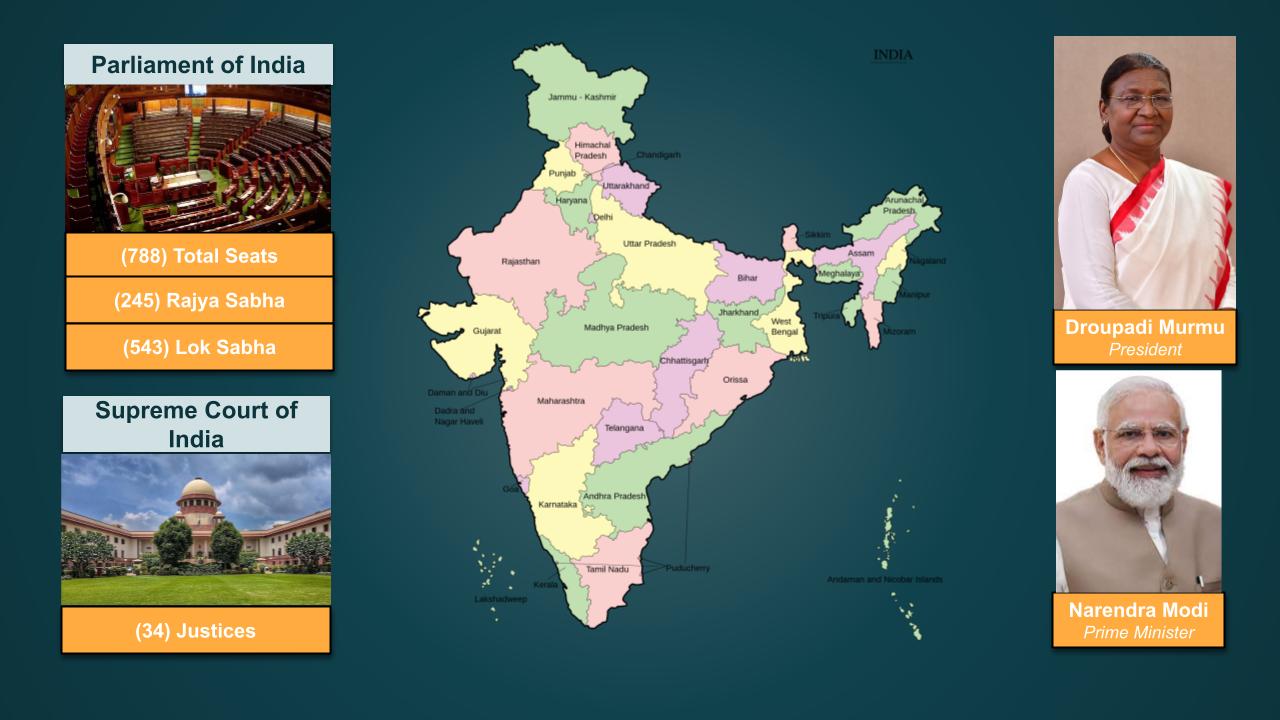
Under the Constitution, there are three primary branches of government: the legislative, the executive and the judiciary, whose powers are vested in a bicameral Parliament, President, aided by the Council of Ministers, and the Supreme Court respectively.

Through judicial evolution, the Parliament has lost its sovereignty as its amendments to the Constitution are subject to judicial intervention. Judicial appointments in India are unique in that the executive or legislature have negligible say.

OnAir Post: Government of India

Prime Ministers of India

The prime minister of India is the chief executive of the Government of India. Although the president of India is the constitutional, nominal, and ceremonial head of state, in practice and ordinarily, the executive authority is vested in the prime minister and their chosen Council of Ministers. The prime minister is the leader elected by the party with a majority in the lower house of the Indian parliament, the Lok Sabha, which is the main legislative body in the Republic of India. The prime minister and their cabinet are at all times responsible to the Lok Sabha. The prime minister can be a member of the Lok Sabha or of the Rajya Sabha, the upper house of the parliament. The prime minister ranks third in the order of precedence.

The prime minister is appointed by the president of India; however, the prime minister has to enjoy the confidence of the majority of Lok Sabha members, who are directly elected every five years, unless a prime minister resigns. The prime minister is the presiding member of the Council of Ministers of the Union government. The prime minister unilaterally controls the selection and dismissal of members of the Council; and allocation of posts to members within the government. This Council, which is collectively responsible to the Lok Sabha as per Article 75(3), assists the president regarding the operations under the latter’s powers; however, by the virtue of Article 74 of the Constitution, such ‘aid and advice’ tendered by the Council is binding.


OnAir Post: Prime Ministers of India

Rajya Sabha(Upper House)

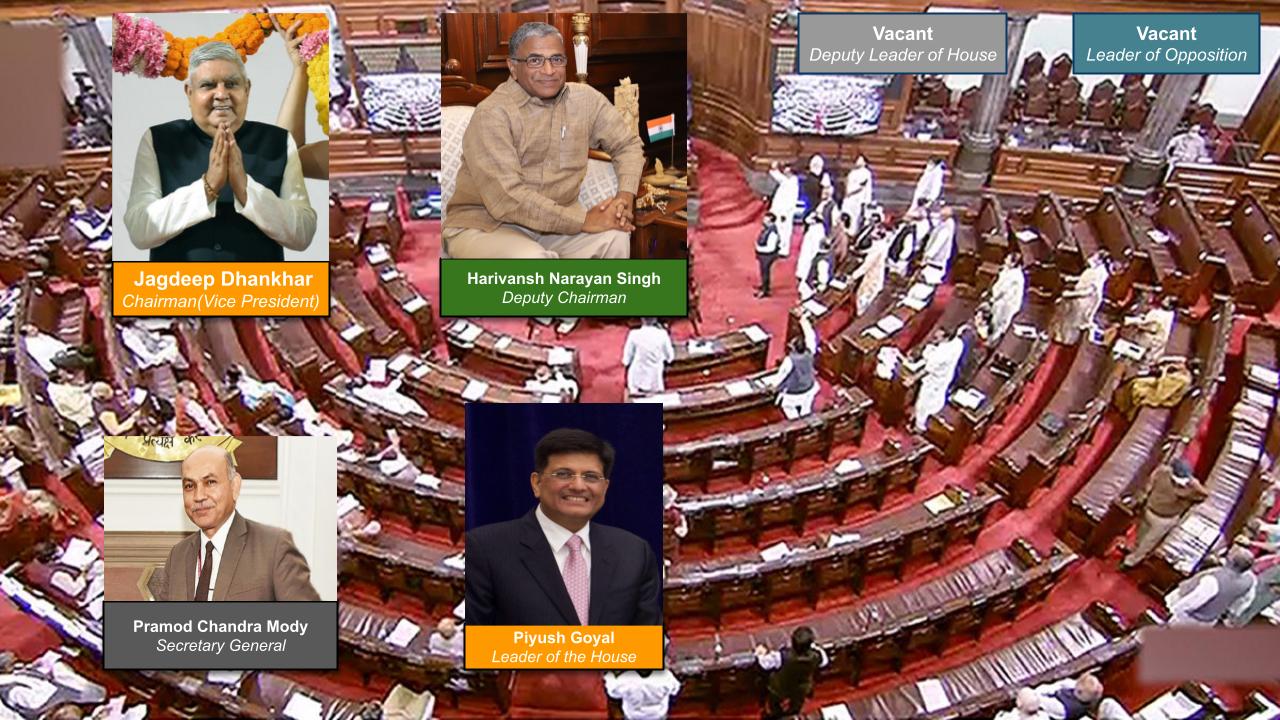
The Rajya Sabha, constitutionally the Council of States, is the upper house of the bicameral Parliament of India. As of 2022, it has a maximum membership of 245, of which 233 are elected by the legislatures of the states and union territories using single transferable votes through open ballots, while the president can appoint 12 members for their contributions to art, literature, science, and social services. The potential seating capacity of the Rajya Sabha is 245 (233 elected, 12 appointed), according to article 80 of the Indian Constitution. Members sit for staggered terms lasting six years, with about a third of the 238 designates up for election every two years, in even-numbered years. Unlike the Lok Sabha, the Rajya Sabha is a continuing chamber and hence not subject to dissolution. However, the Rajya Sabha, like the Lok Sabha, can be prorogued by the president.

The Rajya Sabha has equal footing in legislation with the Lok Sabha, except in the area of supply, where the latter has overriding powers. In the case of conflicting legislation, a joint sitting of the two houses can be held, where the Lok Sabha would hold a greater influence because of its larger membership. The vice president of India (currently, Jagdeep Dhankhar) is the ex-officio chairman of the Rajya Sabha, who presides over its sessions. The deputy chairman, who is elected from amongst the house’s members, takes care of the day-to-day matters of the house in the absence of the chairman. The Rajya Sabha held its first sitting on 13 May 1952.

The Rajya Sabha meets in the eponymous chamber in Parliament House in New Delhi. Since 18 July 2018, the Rajya Sabha has the facility for simultaneous interpretation in all the 22 scheduled languages of India.
OnAir Post: Rajya Sabha(Upper House)

Lok Sabha(Lower House)

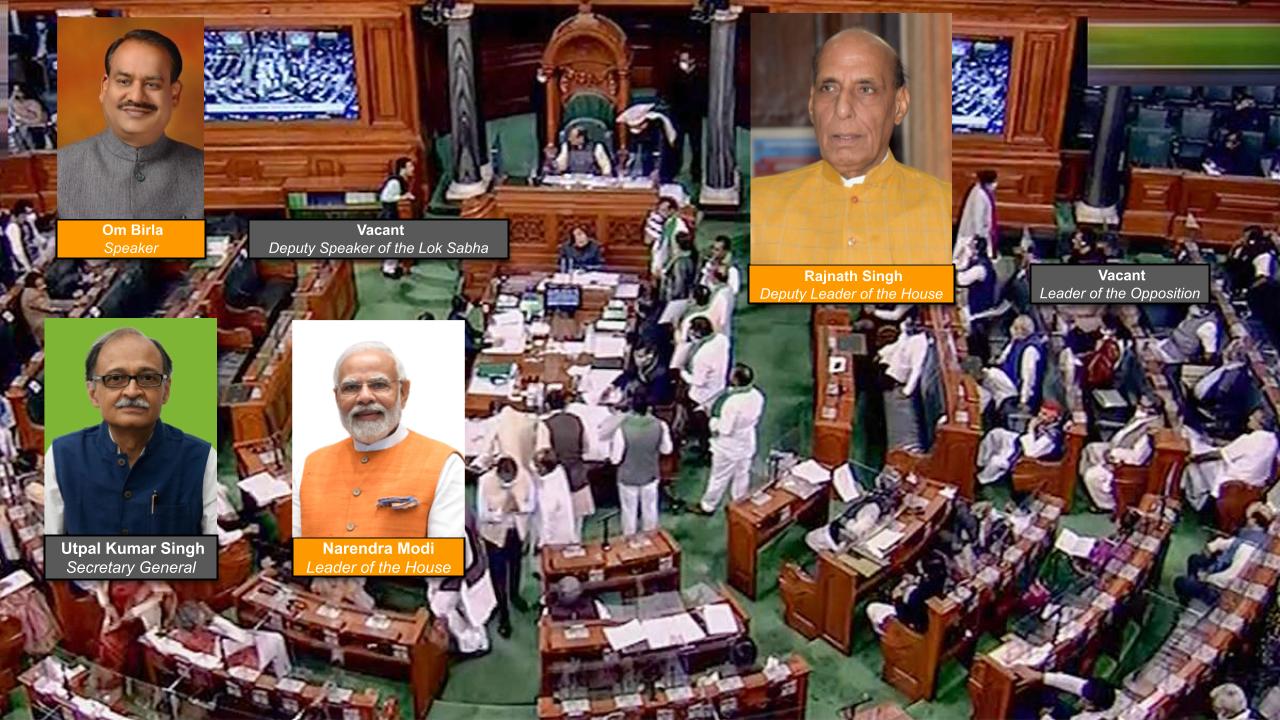
The Rajya Sabha, constitutionally the Council of States, is the upper house of the bicameral Parliament of India. As of 2022, it has a maximum membership of 245, of which 233 are elected by the legislatures of the states and union territories using single transferable votes through open ballots, while the president can appoint 12 members for their contributions to art, literature, science, and social services. The potential seating capacity of the Rajya Sabha is 245 (233 elected, 12 appointed), according to article 80 of the Indian Constitution. Members sit for staggered terms lasting six years, with about a third of the 238 designates up for election every two years, in even-numbered years. Unlike the Lok Sabha, the Rajya Sabha is a continuing chamber and hence not subject to dissolution. However, the Rajya Sabha, like the Lok Sabha, can be prorogued by the president.

The Rajya Sabha has equal footing in legislation with the Lok Sabha, except in the area of supply, where the latter has overriding powers. In the case of conflicting legislation, a joint sitting of the two houses can be held, where the Lok Sabha would hold a greater influence because of its larger membership. The vice president of India (currently, Jagdeep Dhankhar) is the ex-officio chairman of the Rajya Sabha, who presides over its sessions. The deputy chairman, who is elected from amongst the house’s members, takes care of the day-to-day matters of the house in the absence of the chairman. The Rajya Sabha held its first sitting on 13 May 1952.

The Rajya Sabha meets in the eponymous chamber in Parliament House in New Delhi. Since 18 July 2018, the Rajya Sabha has the facility for simultaneous interpretation in all the 22 scheduled languages of India.
OnAir Post: Lok Sabha(Lower House)

Supreme Court of India

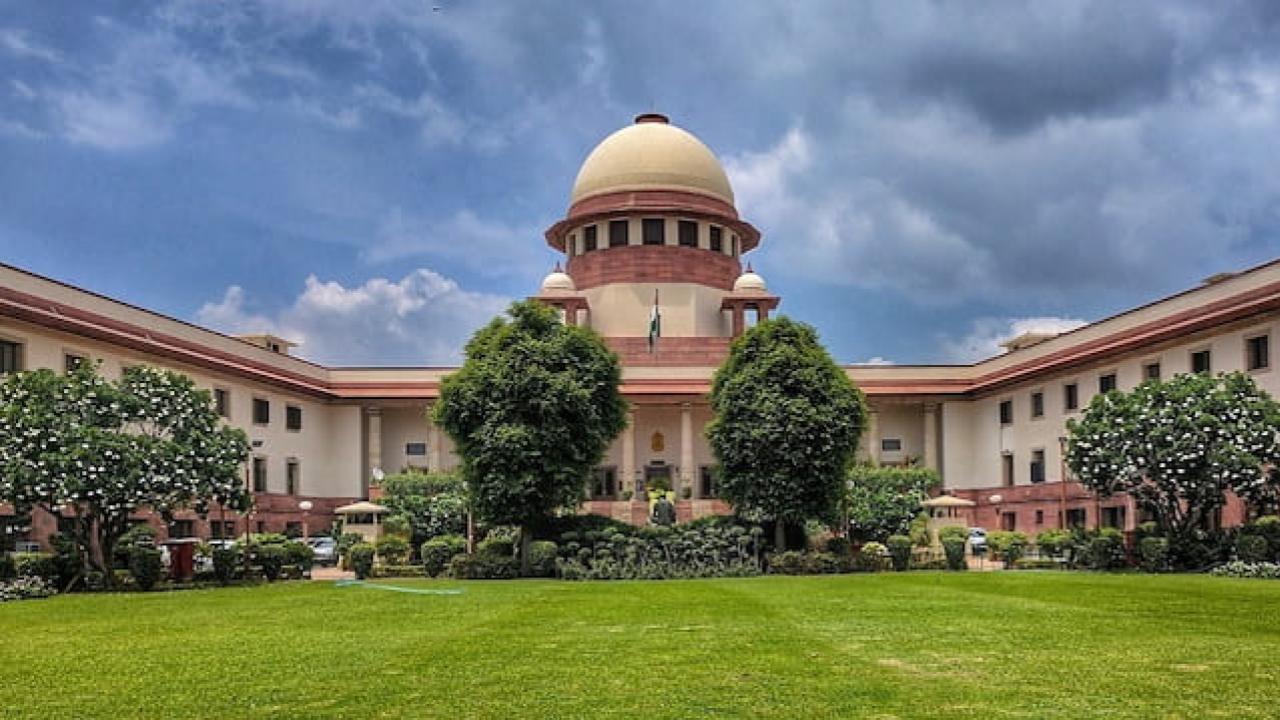
The Supreme Court of India (IAST: Bhāratīya Ucchatam Nyāyālaya) is the supreme authority of India and the highest court of the Republic of India under the constitution. It is the most senior constitutional court, has the final decision in all legal matters except for personal laws and interstate river disputes, and also has the power of judicial review. The Chief Justice of India is the Head and Chief Judge of the Supreme Court, which consists of a maximum of 34 judges, and has extensive powers in the form of original, appellate and advisory jurisdictions.

As the apex and most powerful constitutional court in India, it takes up appeals primarily against verdicts of the High Courts of various states of the Union and other courts and tribunals. It is required to safeguard the fundamental rights of citizens and settles disputes between various government authorities as well as the central government vs. state governments or state governments versus another state government in the country. As an advisory court, it hears matters which may specifically be referred to it under the Constitution by the President of India. This court can override legislature in favour of basic structure of the Indian Constitution.

The law declared by the Supreme Court becomes binding on all courts at all levels within India and also by all of the Union and State Governments. As per the Article 142 of the Constitution, it is the duty of the President of India to enforce the decrees of the Supreme Court and the court is conferred with the inherent jurisdiction to pass any order deemed necessary in the interest of justice. The Supreme Court has replaced the Judicial Committee of the Privy Council as the highest court of appeal since 28 January 1950.

OnAir Post: Supreme Court of India

Narendra Modi

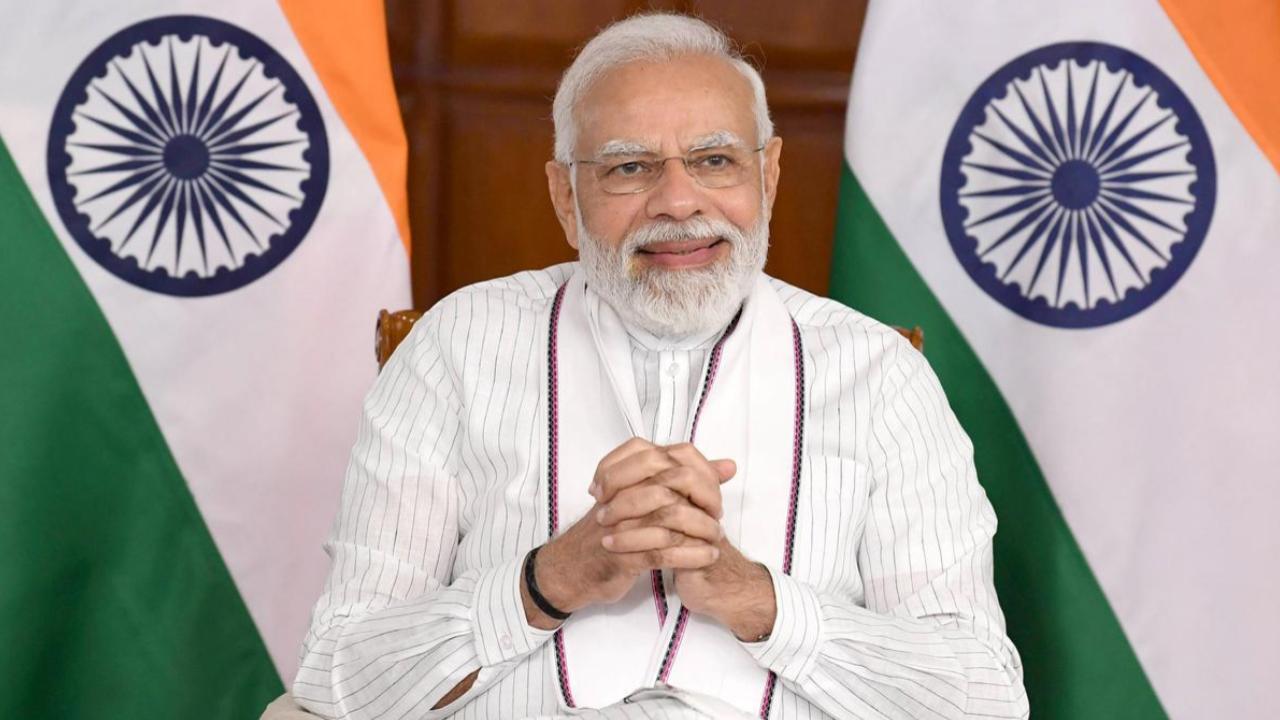
Narendra Damodardas Modi is an Indian politician serving as the 14th and current Prime Minister of India since 2014. Modi was the Chief Minister of Gujarat from 2001 to 2014 and is the Member of Parliament from Varanasi.

He is a member of the Bharatiya Janata Party (BJP) and of the Rashtriya Swayamsevak Sangh (RSS), a right-wing Hindu nationalist paramilitary volunteer organisation. He is the longest serving prime minister from outside the Indian National Congress.

OnAir Post: Narendra Modi

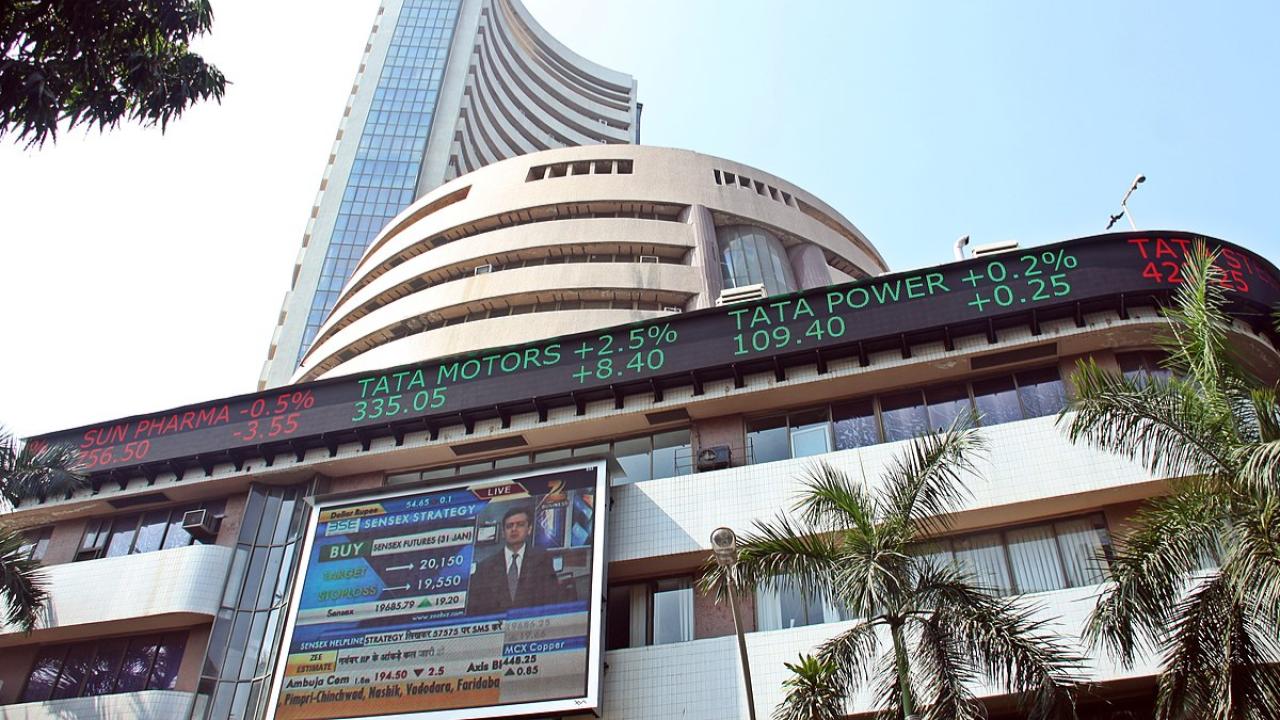
Economy of India

The economy of India has transitioned from a mixed planned economy to a mixed middle-income developing social market economy with notable state participation in strategic sectors. It is the world’s fifth-largest economy by nominal GDP and the third-largest by purchasing power parity (PPP). According to the International Monetary Fund (IMF), on a per capita income basis, India ranked 142nd by GDP (nominal) and 125th by GDP (PPP).

From independence in 1947 until 1991, successive governments followed Soviet style planned economy and promoted protectionist economic policies, with extensive state intervention and economic regulation. This is characterised as dirigism, in the form of the License Raj.[45][46] The end of the Cold War and an acute balance of payments crisis in 1991 led to the adoption of a broad economic liberalisation in India.

Since the start of the 21st century, annual average GDP growth has been 6% to 7%,[43] and from 2013 to 2018, India was the world’s fastest growing major economy, surpassing China.[49][50] Economy of the Indian subcontinent was the largest in the world for most of the recorded history up until the onset of colonialism in early 19th century. Share of Indian economy is 7.5% of world economy by PPP terms.

OnAir Post: Economy of India

Skip to toolbar